


This is CC Insights: Perspectives from Climate Capital. You are receiving this because you have subscribed to our Substack. Upgrade to CC+ for insider access & community or manage your subscription here.
But first: Network Fund & Climate Angels
→ Invest in the Network Fund. Large fund access with micro-fund minimums.
→ Join Climate Angels. Sessions w/ top investors, discounted carry, community & more.
Hi there.
My name is Nick van Osdol. I’m a Venture Partner at Climate Capital & Resilient Systems Capital, and the mind and muscle behind Keep Cool, a newsletter that reaches ~15,000 practitioners across domains and disciplines deeply embedded in “climate tech.” My day job is at Advanced Research for Climate Emergencies (ARC), where we scout, scope, design, seed, and scale non-profit translational R&D and field-building programs focused on catastrophic climate risks (including but not limited to Earth System Tipping Point risks). If you enjoy what follows, you should also sign up for ARC’s Substack and for the Keep Cool newsletter. If not, well, I’d love to hear that feedback, and why, if you’re willing to spare the time. Email me anytime -> nick@keepcool.co
It’s been another summer of heatwaves and wildfires across North America and Europe, as well as devastating floods and droughts all over the place (for e.g., from the U.K. to Mongolia). Water levels in the Danube and the Rhein rivers recently got so low that it disrupted transportation as well as nuclear reactor operation (the same has happened to the Rhein in several recent years). Global ocean temperature records are being set almost continuously (which is also a function of the developing El Niño). And with said El Niño growing, and with the predictions that it is highly likely to be unprecedented in strength, the next year plus will bring lots more disruption and disaster, although it will be valuable at least insofar as it will offer a window into what a future with >2° C warming may look like.
Most recently and devastatingly, a glacial collapse led to an astonishingly rapid flash flood that killed thousands in Nepal, with many still missing and untold destruction otherwise (the economic toll will exceed $2B and could rise towards ~$5B+; either way, those are costs Nepal’s economy alone cannot shoulder. To be sure, this was not directly attributable to climate change, per se. Single event attribution is always perniciously hard and divisive, and many climate practitioners and journalists are too quick to ascribe climate change as an acute “cause” of all negative and damaging extreme weather events.
Still, we do know that climate change exacerbates the conditions that make disasters like this more likely: a warming climate can make mountainsides less stable by melting permafrost, which binds rocks and ice together, as well as by increasing the rate of water infiltration, which destabilizes rocks (this pattern roughly holds for other glaciers, too, where ocean water ‘intruding’ underneath glaciers can accelerate destabilization).
Some of the best research on these fronts actually comes out of Nepal. The International Centre for Integrated Mountain Development (ICIMOD) released its latest glacier assessment on August 12th. The report specifically warns of “particularly rapid losses in the eastern and central HKH.” Central HKH is an area that covers the specific locations where this disaster occurred. Clearly, governments should work more closely with climate and geologic scientists and pay attention to their work. These are field-building and coordination opportunities which, if not capitalized on, can be as costly as other lags and snags in science and R&D.
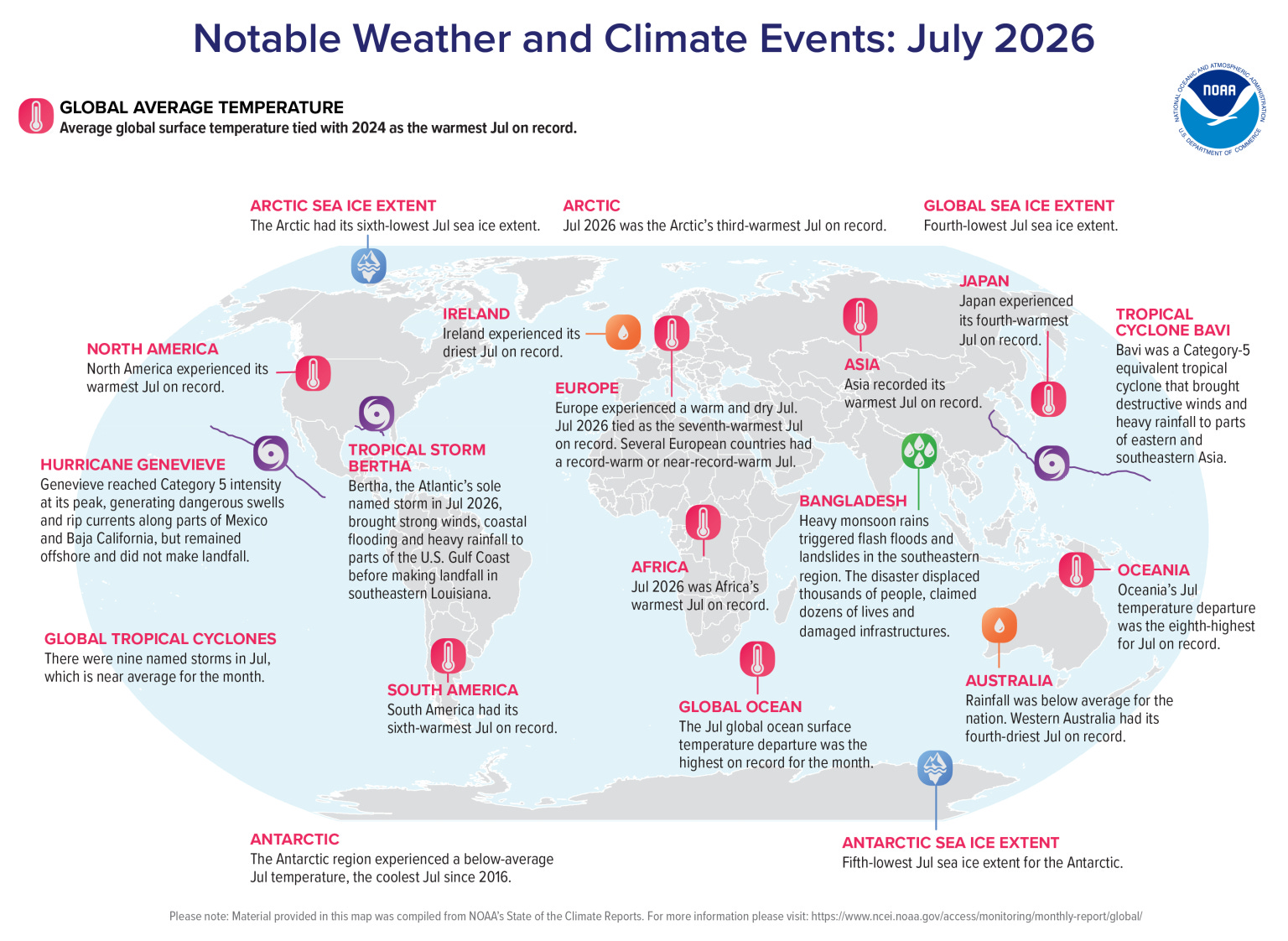
Caption: Across the world, July was a big month for record-breaking weather and climate events [Credit: WMO]
Well, that was quite the sobering opening. I promise this won’t all be doom and gloom. That said, collectively as a species, we must occasionally reckon, accurately and with full attention and awareness, with the full scope of the challenges climate change poses. This occasionally requires being present to devastation (emphasis on occasionally).
It will also require:
A more comprehensive understanding of what climate change is and why it itself is changing, which is the first thing we’ll explore.
Resolving or at least reducing and better constraining a lot of unknowns and uncertainties that persist in climate science, perhaps more than you’d think.
Expanding conventional understanding of what actions are required to respond to climate change, including an evolved understanding of adaptation and resilience.
Climate change itself is changing
The confluence of extreme weather and climate-related damages this year (and really this decade) has brought climate change back into mainstream discussions to a degree (ha). We’re still far from the heyday of, say, 2021, in terms of enthusiasm for climate tech and climate conversations generally. And the policy environment in the U.S. is certainly ‘different’ today in the good ol’ USA than it was five years ago (even the suggestion, let alone legislation, stipulating that the U.S. should stop exports of liquefied natural gas, which were taken seriously at the time during the Biden admin, are now unimaginable). Plus, most of the attention that does still flow to “climate”-related or adjacent things is monopolized by topics, startups focused on, or massive fundraising deals surrounding cleaner energy when it’s useful for AI and data centers. And that’s fine!
But the confluence of the catastrophic physical impacts, as well as their downstream impacts on human systems, has also started to attune more people to the idea that there are larger shifts afoot, and that climate change isn’t the same as it was in, say, 2015. It’s getting gnarlier, realer, more visceral, more ‘now,’ not to mention more complicated, and more challenging. Climate change itself is changing, and not in our favor, so to speak, a stark fact to reckon with (personally, I don’t blame those who have stopped paying attention for their and mental well being’s sake; I’ve done the same with respect to most politics).
Let’s now illustrate how and why Earth systems (read as the planet’s largest physical systems, like ocean circulations), are changing and why that matters a lot more than greenhouse gas emissions alone do:
Global warming is accelerating. That doesn’t just mean the Earth is continuing to warm. It means the rate at which the Earth is warming is also increasing: The world got ~0.35° C warmer between 2015 and 2025, almost double the average decadal warming rate between 1970 to 2015, which was closer to ~0.20° C.
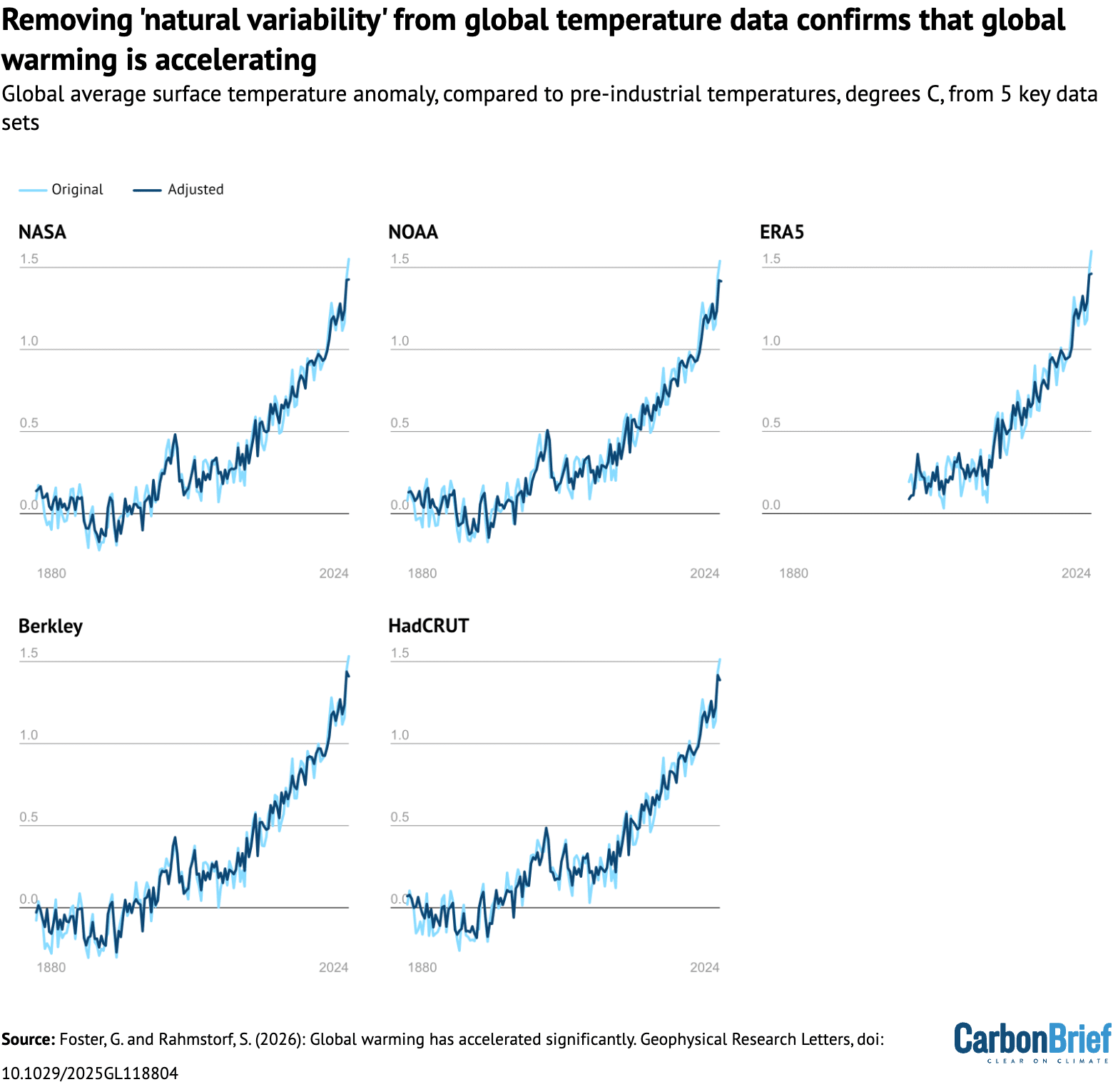
Credit: Carbon Brief
This is a function of multiple drivers. Global warming and the climate change it causes isn’t just driven by greenhouse gasses (“GHGs”) and their greenhouse effect. GHGs are prominent drivers, and the fact that global emissions of most of them remain at all-time highs is a contributing factor in accelerating warming.
Factors beyond GHGs are also significant. Earth’s Energy Imbalance (“EEI”) refers to the difference between how much radiation Earth, in aggregate, absorbs versus how much it reflects back to space. When EEI is positive, it means the Earth is absorbing more energy than it is reflecting back to space on balance, and the planet accumulates heat and warms as a result. When it’s negative, as has happened many times in the geologic record, including likely as recently as the past thousand years, the Earth cools. If EEI is close to zero (little imbalance), as has also often been true, the climate is more stable. Right now, EEI is at an all-time high for the time periods human society has been around.
Another major contributor to EEI is Earth’s reflectivity. A common example (and a relatively straightforward and appreciable one) of how changes here impact climate change pertains to Arctic sea ice. Sea ice cover at the end of summer in the Arctic shrank, on average, by ~12% per decade relative between 1979 and 2024 (relative to a 1981–2010 average).
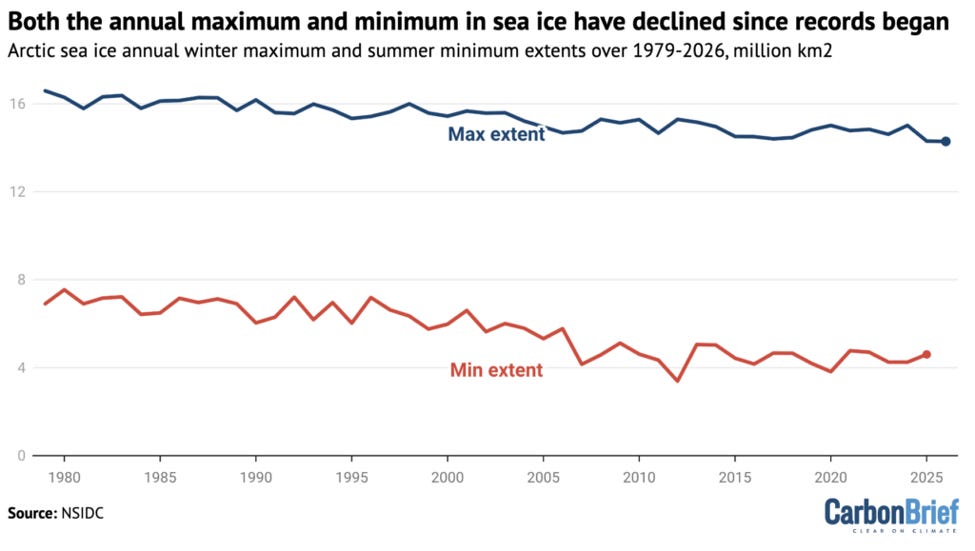
Ice and snow are among the most reflective natural surfaces on Earth; they reflect a lot of energy from the sun back into space. This keeps the planet cooler, offsetting some of the warming impact of the GHGs accumulating in the atmosphere. But as the Earth warms, Arctic sea ice melts, giving way to open ocean water. The open ocean is not particularly reflective, especially not relative to the sea ice it once was in this instance.
Hence, as sea ice melts, the Earth loses reflectivity. This increases EEI, contributing to more warming. This example is also useful because it exemplifies reinforcing feedback. The higher the positive EEI and the more the planet warms, the more, in general, sea ice, glaciers, and snow melt, reducing reflectivity, further increasing EEI. More on those later.
The factors beyond GHGs are becoming even more significant. Here’s the real rub. Since 2001, observations from NASA’s CERES instruments document a sustained increase in absorbed radiation, indicative of declining reflectivity. Specifically, data from NASA’s CERES instruments show Earth’s average “reflectance” fell from ~29.3% to ~28.7% between 2003 and the end of 2025, possibly falling more rapidly in recent years.
That may seem like a diminutive reduction in reflectivity. But there’s a massive amount of inherent leverage to it. Reflectivity, while not discussed all that much, at the level of the entire Earth system, wields massive influence on EEI. The warming that Earth’s declining reflectivity has driven has, alongside all-time high GHG emissions, of course, led to a doubling (or even a tripling) in EEI since the turn of the century (see another scientific source here), actually becoming a more salient driver of increased EEI than GHGs over that time period (for more on that, read on here).
The main reflectivity losses aren’t just in snow and sea ice, either. Those have certainly declined and contributed, as we noted earlier. But ice, glacial, and snow losses account for ‘only’ ~27% of lost reflectivity since 2001. The other 73% is attributable to a combination of diminishing cloud cover and losses of atmospheric aerosols. These two categories also directly influence and interact with each other, which complicates disambiguation of which is driving more or less, how, and under what conditions.

Caption: Photo is my own, taken from a plane, a handful of days ago
Suffice to say, reflectivity matters, and some things that get very little attention in climate contexts (like clouds!) can have just as much leverage on warming as gigatonnes of GHGs. For one more example, I used to write extensively about methane and other warming induced emissions and feedback loops, which are now also finally getting more press.
Nonlinearity – the other ‘era’ we’re entering (and have always been in)
The point of setting the stage, as we did thus far, with an introduction on EEI was to underscore how it’s come to pass that climate change is not only in an “overshoot” era, i.e., one in which we acknowledge that warming will exceed 1.5° C and even 2° C, and likely for a sustained period of time (central estimates are tracking towards 2.9° C)
The point is that climate change is accelerating, and thereby entering a more “nonlinear” era, due to increasing dislocations driven by the other components, like reflectivity, that impact EEI.
I’m far from the first to make these points. Kelly Erhardt, who works at Outlier, a stellar climate-focused non-profit that funds a lot of niche work to address underserved and overlooked yet high-leverage solutions (comparable to what my employer, ARC tries to do), said it succinctly in a recent interview. Plenty of other smart people and organizations are also sounding the alarm about ‘nonlinear’ climate change, including the likes of JP Morgan, which became the first major bank to address climate tipping point risks directly. Sarah Kapnick, JPMorgan’s global head of climate advisory, noted explicitly that the world may be moving out of a “linear” phase of climate change and…
“...into a more accelerated nonlinear phase where you’re going to start seeing greenhouse gas concentrations accumulate faster in the atmosphere…”
Perhaps the most valuable addition I personally have to emphasize is that the Earth system and climate, let alone climate change, never was linear. There are far more dynamics and physical properties in the Earth system that aren’t linear than there are ones that are. One need look no further than the relationship between CO2 molecules in the atmosphere and their warming impact on the Earth. That relationship is not even linear (it’s logarithmic)!
Appreciating nonlinearity as a baseline characteristic of the Earth system encourages us to think more comprehensively about what climate change is, how it can change, and what the implications of that are for how we respond to it. Here’s part of the answer: We need to do a lot more of the conventional things we already do with increased pace and volume. Then we also need to consider doing other, fundamentally different and new things as well. The current toolkit of mitigation, adaptation, and carbon removal alone may not suffice. For our purposes here, we’ll focus on expanding and evolving what adaptation entails.
Returning to the urgency of these lines of inquiry, note that we’re increasingly seeing the impact of nonlinearity all over the place and planet. That ties back into the extremes we started this piece with. It also applies overall, at the level of global climate models. Some models, including prominent ones, upon which many important decisions are based, did not predict the aforementioned declines in reflectivity well. This may stem from the fact that there’s a lot we don’t know about cloud microphysics and aerosol-cloud interactions. There’s a lot we don’t know about aerosols in general (the error bars on their aggregate warming impact in IPCC reports are massive, as visualized below).
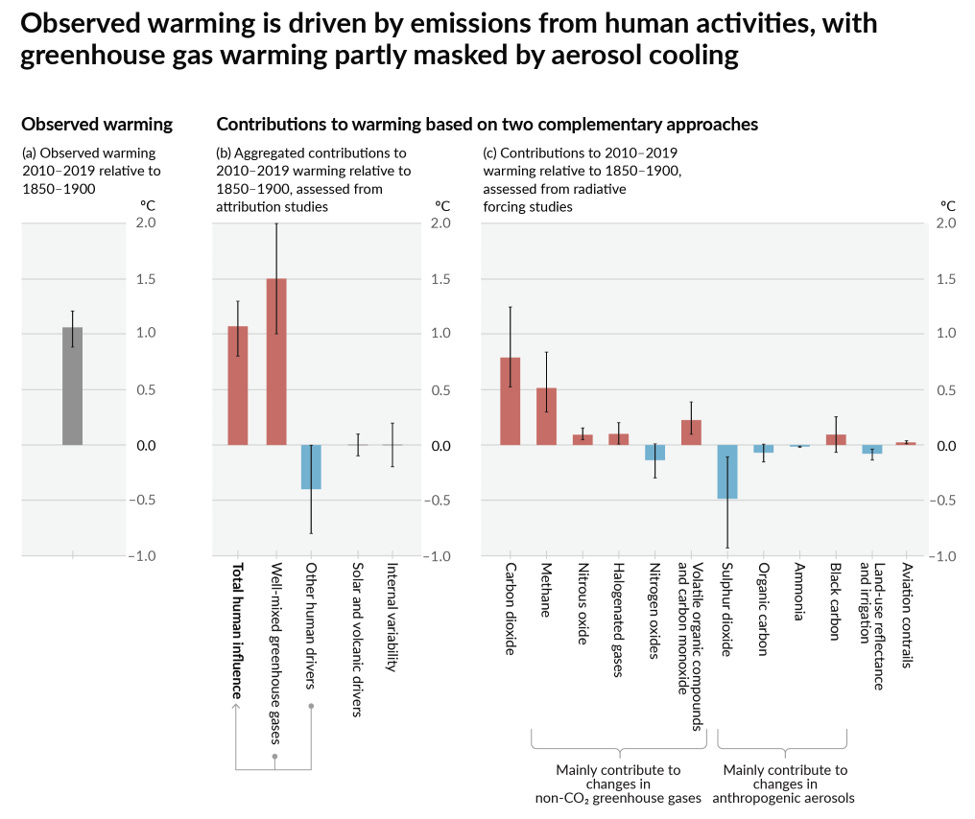
Caption: Figure SPM.2 in IPCC, 2021: Summary for Policymakers.
Setting aside questions and uncertainties that are, for now, unanswerable and irreducible, such as why exactly many climate models have been very “off” when it comes to certain specifics, like reductions in reflectivity, the presence and magnitude of the divergence in them is problematic, as it suggests we may have underestimated climate sensitivity, a measure of how much Earth’s surface will warm in response to a doubling of the atmospheric carbon dioxide concentrations. If climate sensitivity is higher than we thought and think, we may be underestimating future warming, even as we know it’ll get hot.
The unknowns go on. Here’s another rabbit hole. Take the risks facing specific Earth systems. As defined by Global Tipping Points, Earth System Tipping Points (ESTPs) occur:
“when changes in a system become self-perpetuating and difficult to reverse beyond a threshold, leading to substantial, widespread impacts (Armstrong McKay, 2024; Armstrong McKay et al., 2022; Milkoreit et al., 2018).”
The definition continues with a lot more detail in the 2025 report. Two more things I’ll emphasize are that ESTPs often exhibit hysteresis, i.e., the risk of irreversibility, and can set off “cascade[s] of accelerating and compounding damage (Wunderling et al., 2024).”
ESTP risks are, similarly to extreme events this year, all over the place. Boreal forests. Coral reefs. The Amazon. Many ice sheets, in both the Arctic and Antarctica. Oceanic and atmospheric circulations (most notably, at least in the media, AMOC).
Let’s take an example. The Greenland Ice Sheet (GrIS) almost certainly faces tipping point risk; the 2023 Global Tipping Points report attributes high-confidence to this, drawing from evidence from ice-sheet models and paleorecords. This means the ice sheet, which is massive, could enter an unstoppable, irreversible destabilization if certain critical thresholds are passed. In the GrIS’s case, the critical threshold is thermal (related to global warming). And it’s already close: 1.5°C is the best estimate of it. That’s a threshold the world is likely to cross soon, possibly within a few years, likely next decade (per UNEP). Further, as if that all weren’t enough, the GrIS has all kinds of its own built-in nonlinearities (which is, again, common of ESTPs.
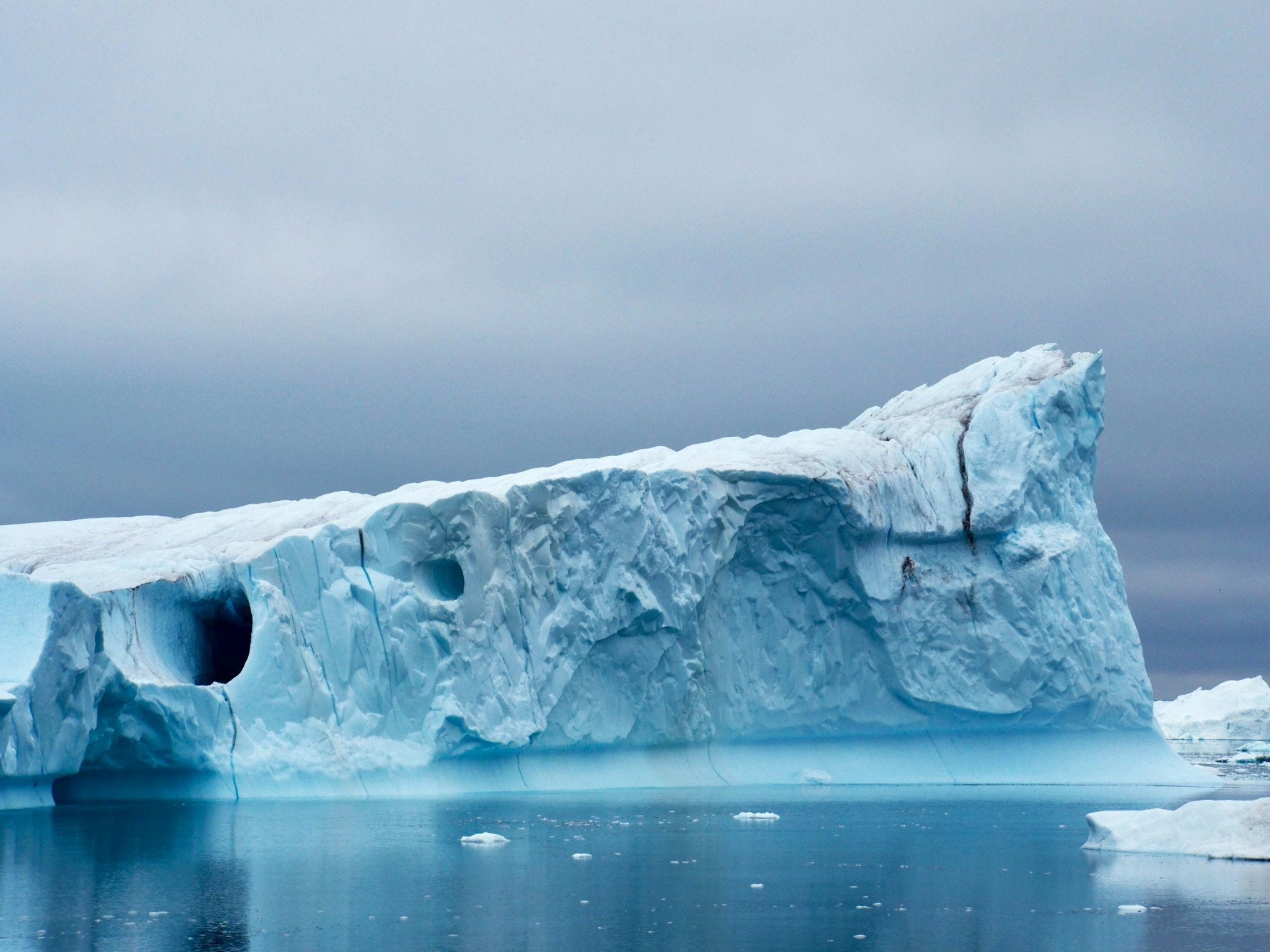
A glacier in Greenland (Credit here)
So, the GrIS’s unstoppable and irreversible transition could start within decades. It could even already be underway. For reference, the GrIS holds 7+ meters of sea level rise. How long it would take and to what extent it would be ‘complete’ (a scenario where the GrIS collapses entirely), is all, once again, highly uncertain. Modeling efforts are limited for all kinds of reasons, starting with the absence of observational data from historical precedents within human societal timelines. Machine learning and AI will help, as in many cases. But they won’t solve anything comprehensively. One saving grace is that a collapse would likely take a while (centuries or millenia), though, once again, mass loss is expected to be highly nonlinear (and frontloaded), and the timelines are, again, highly uncertain as well.
Our thinking–and our climate action plans need to evolve accordingly
The point here is not to harp on the challenges ahead or to veer into despair.
It’s to underscore that climate change is evolving, so our already insufficient efforts to address it must also evolve. First, we need to reframe leftover, erroneous mental modes that position anything related to climate change, whether its drivers, its central mechanics, or its consequences, as linear. In some select cases, maybe linearity is directionally accurate-ish. That’ll be the exception, not the norm. Then, we need to reconsider what is and may be required to respond to this evolving, and highly uncertain, climate change.
Because there’s also tremendous uncertainty about how the next few decades, let alone centuries, will unfold, and about countless specific dynamics pertaining to specific Earth systems and the Earth system as a whole, all of this reimagining of climate action plans requires some comfort sitting and operating within deep uncertainty.
The ESTPs example was used as its a useful anchor for nonlinearity: ESTPs are the product of open systems in which we’re seeing emergent behavior, i.e., stuff there’s little to no observational data for (like the potential collapse of ice sheets) and because they, alongside other feedback like lost reflectivity, surprise us and humble our past prediction efforts and forecasting expectations. As a transition, they’re also noteworthy because of the cascading interactions they might produce, which will require new types of adaptation and more creative, more expansive resilience thinking. In lieu of trying to propose a re-imagining of everything a comprehensive climate change response requires of us, let’s focus here on what we really mean (and need to accomplish) with resilience.
Adaptation is already lagging. And now it needs to expand in scope, too.
What was adaptation should and must now expand. We’re using the term “resilience” to capture this expansive evolution. The world is already lagging in the adaptation efforts that are known to be necessary to address climate change impacts. There’s lots we know we need to do that we simply must do and do faster, more efficiently, and more completely. Energy efficiency has become grid asset optimization. Recycling has become critical mineral recovery. Disaster prediction has emerged as a completely new category by virtue of the digital age. But, because of how the shape of the overarching climactic challenges are changing, we also have to expand the scope of what adaptation means.
All of this makes the case for orders of magnitude more resilience (remember, this is broader now than just adaptation); which includes everything from infrastructure for observational data and better modeling and prediction to early warning systems, other forms of preparedness (including social ones, such as education, and translation of complex risks into legible messages for different groups, Indigenous peoples, etc…) through more proactive prevention efforts, which may, in some cases, look like more direct interventions in at-risk Earth systems—take, for instance, research into the safety, feasibility, and potential efficacy of targeted, regional, reversible strategies to reduce heat in the Arctic and preserve sea ice, permafrost, and the Greenland Ice Sheet—rather than to solely focus on mitigating the drivers of the perturbations (GHGs and warming). This must also all happen in a cross-discipline and cross-domain fashion. This is a call-to-action for policymakers as much as it is for economists as much as it is for leaders of youth networks.
This all also has implications for capital, and for venture capital, despite how diminutive a sliver of all capital it is. As we see accelerating and exacerbating impacts in terms of Earth system disruption and dysregulation (and the downstream impacts of that on societal systems), so to do we see increasing financial burden across sectors and slices of the global economy. We see climate change-driven costs rising on the balance sheets of many of the world’s largest companies—and across both the ‘old’ and ‘new’ economies—whether insurers and utilities, industrial manufacturers and food producers, or hyperscalers and AI labs. Natural catastrophes are predicted to cost the world $450B annually going forward, at least per a new forecast the Financial Times covered recently. Less than half of that is insurance. There are countless stats we could prattle off here, but we trust it’s not needed.
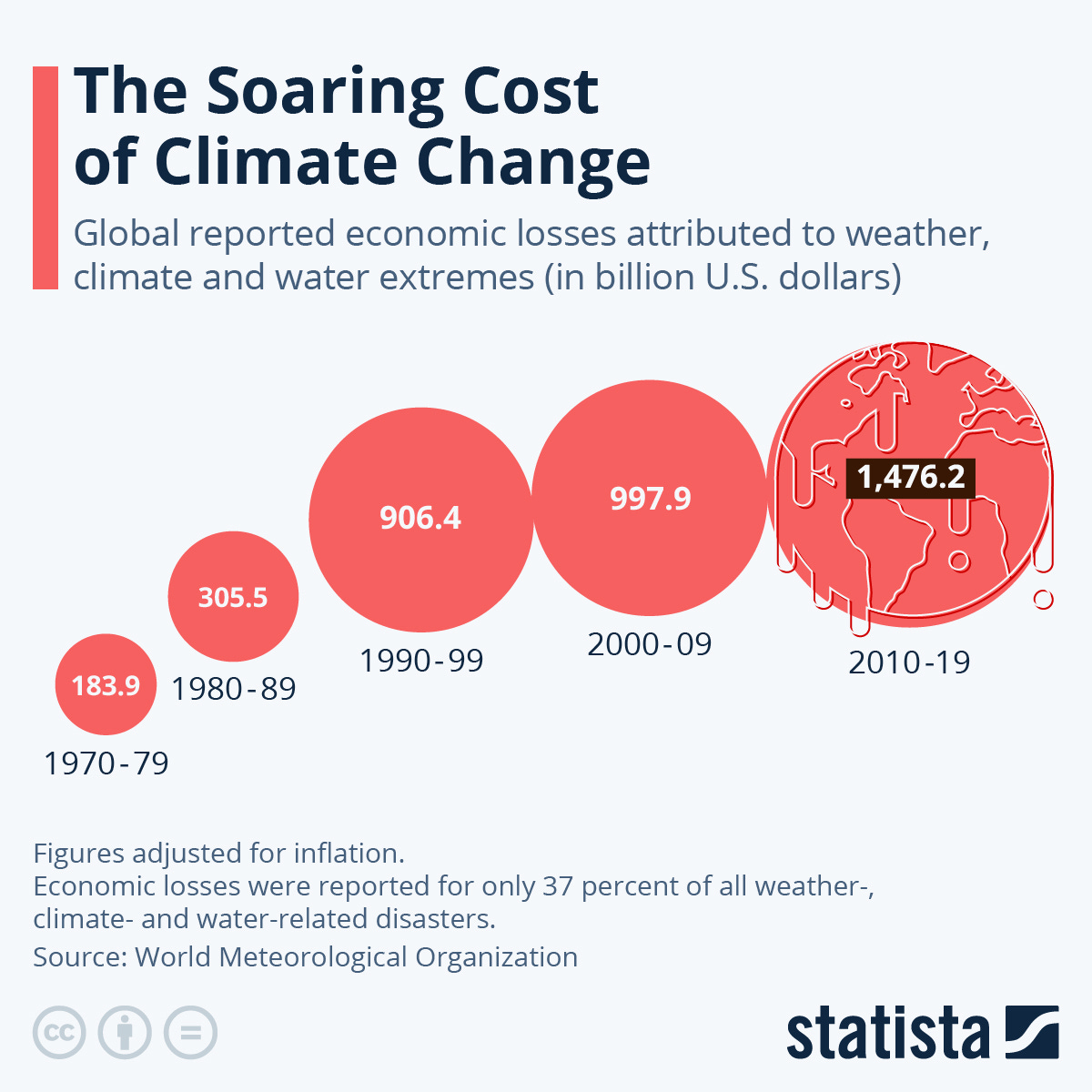
Moreover, for many, and for a long time, it was easy (for venture capital) to ignore all the physical roots that support the world we know, be it data centers and electrical distribution equipment for the internet (nevermind for AI), millions of miles of pipelines that ferry fossil fuels, hydroelectric dams and wind turbines that reliable provide clean power for decades but do get old (just like all of us), and legacy industrial systems implemented decades before modern computing/EPC/material science - let alone the internet.
Was it lucrative to invest in software businesses, social platforms, and e-commerce? Totally. Will it be forever? Hard to say. Less likely. What’s certain is that everything we named above in the physical world, and all the Earth system risks we explored above, will require herculean, often parallel, coordinated, and distributed future-proofing efforts. Both for society as it is and as it will be, and for climate change as it is and as it will be.
For us in the early-stage so-called ‘deeptech’ space, we spend our careers obsessing over the world’s plumbing: Energy, power, logistics, raw materials, and infrastructure. We at Climate Capital spun out Resilient Systems Capital for the reasons this piece has gone to pains to concretize; the resilience the world will require is not what we conventionally think of today as adaptation. The opportunities inherent to advancing resilience, the orders of magnitude are staggering: trillions in economic value generated and/or protected and preserved, billions of people kept more safe from extreme weather, food insecurity, physical displacement, and adverse health effects.
We support teams that often understood that well before we did and have specific plans they’re already moving towards those ends.
In closing: On a personal note
We waded through some doom and gloom. Unfortunately, that’s physical reality. A great cure, in my personal opinion, at least, for the anxiety, be it acute or existential, is to move. To do something, actual physical and emotional motion. Working on adaptation and resilience to climate change is among the most impactful and rewarding work imaginable this century. And it’s as intellectually stimulating as just about anything else, too; there’s incredible beauty, complexity, and deep uncertainty inherent to many Earth systems, and the Earth system as a whole. There’s plenty of fear in all that we need to solve as well as understand better. And plenty of joy, too.
We’re actively deploying venture capital in companies making a difference:
Learn about Resilient Systems Capital
Invest as little as $5k/quarter into Climate Capital’s Network Fund
Invest as little as $1k/SPV into Climate Capital SPVs
––
Note: The Author’s opinions are their own and not necessarily representative of Climate Capital.
Disclaimer: Under no circumstances should any information or content in this email be considered an offer to sell or solicitation of interest to purchase any securities, including any securities advised by Climate Capital or any of its affiliates or representatives. Further, no content or information herein is or is intended, nor should it be construed as, an offer to provide any investment advisory service, financial advice, legal, tax, accounting, investment, or other advice from Climate Capital or any of its affiliates (collectively "Climate Capital”). Under no circumstances should anything herein be construed as fund marketing materials by prospective investors considering investing in any Climate Capital investment fund. Content contained herein does not constitute an offer to sell — or a solicitation of an offer to buy — any securities and may not be used or relied upon in evaluating the merits of any investment. Information regarding companies highlighted herein has been provided by third parties, and Climate Capital makes no representations or warranties as to its accuracy, as to the viability of any company listed herein, or the results of any investment in a listed company.